
Criminal Court Cases in San Mateo County
The Superior Court of California, County of San Mateo Criminal Division handles felony and misdemeanor prosecutions. The division also publishes routes for schedules, active warrants, bail, probation information, sentence modification, and post-conviction resources. Court staff keep the filed case record; police and the Sheriff keep their own incident and arrest reports.
The Southern Branch at the Hall of Justice, 400 County Center in Redwood City, and the Northern Branch at 1050 Mission Road in South San Francisco both serve criminal matters. Their office and telephone hours are Monday through Friday, 8:00 a.m. to 4:00 p.m., at 650-261-5100. The Central Branch handles traffic and other court services. Juvenile matters go to the Juvenile Branch and are not ordinary public criminal files.
The court's Criminal Division source shows the official starting point for case schedules and criminal services.
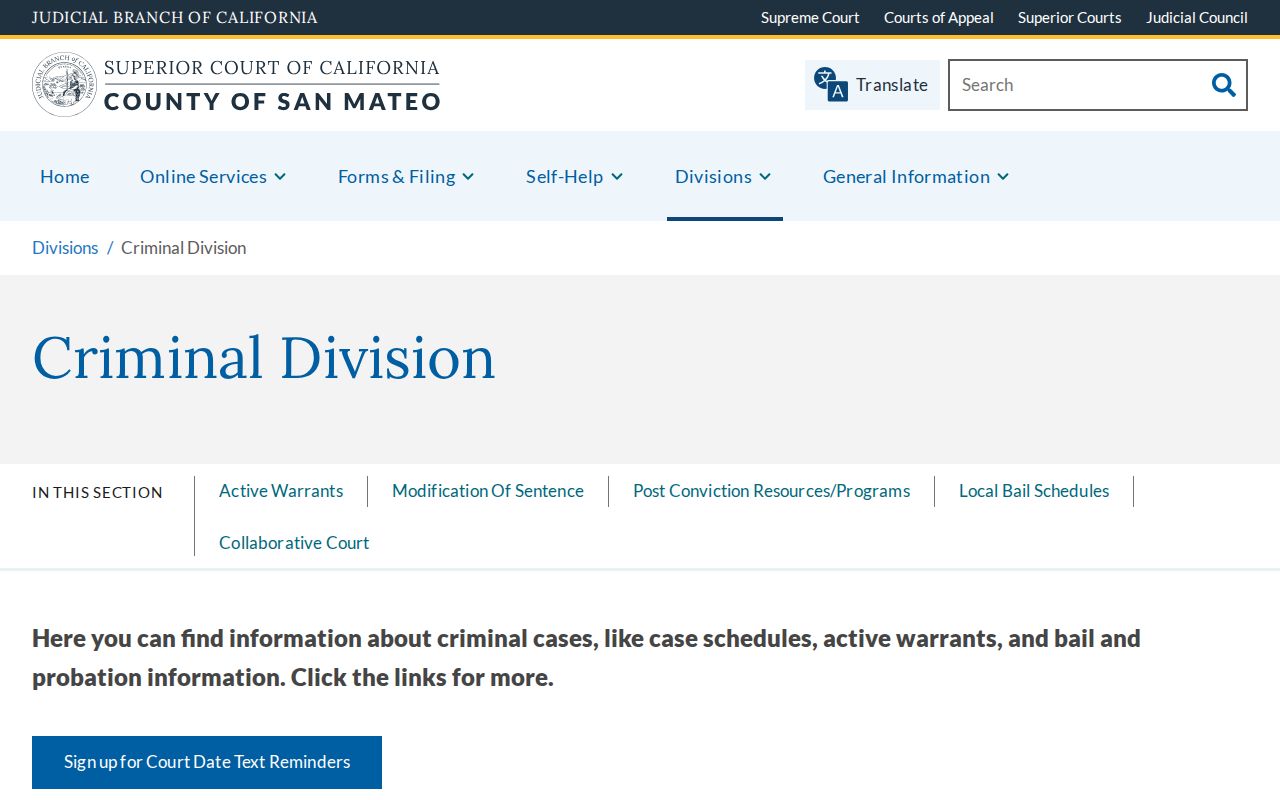
That division page helps separate court-case questions from requests that belong with an arresting agency or jail.
Search San Mateo County MIDX
The San Mateo Superior Court Records Index, called MIDX, is the free public index for appeals, civil, criminal, family, probate, and small-claims matters. It offers case-number, person, business, and filing-date search modes. Traffic tickets use a separate payment system.
MIDX is an index, not a document library. It generally returns a case number, party type, case name, case file date, and source of the index information. It does not link directly into Odyssey, and a disposition is not guaranteed to appear. Use a result as the key for a clerk inquiry, file viewing, or copy order.
The court's online-access instructions explain which route applies to a case.
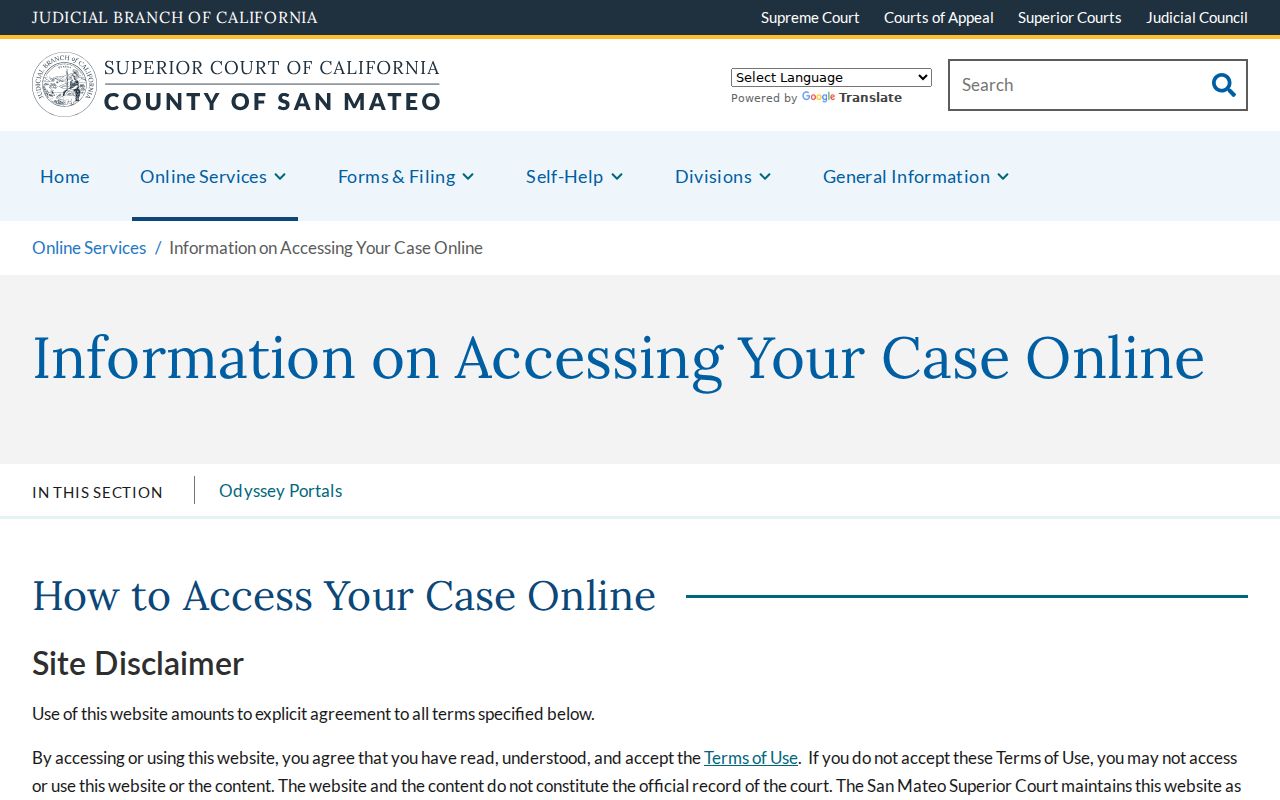
The instructions confirm that online index access and access to the actual case file are separate steps.
San Mateo County Case Record Searches
Begin with the narrowest reliable identifier. A complete case number avoids name collisions. A name search works when the number is unknown, while the five-day filing-date window can locate a recent matter. Then confirm the case against its file date and party role before requesting documents.
- Open MIDX and choose case number, person, business, or filing-date search.
- Enter at least five alphanumeric characters for a case number, or at least two characters for a person's first and last names.
- Add an asterisk after name criteria only when using the court's wildcard method.
- Record the case number, party type, file date, and source shown in the result.
- Use the clerk, Records Management counter, Odyssey access route, or mail-copy channel for documents and disposition details.
| Field | Type | Requirement | San Mateo County rule |
|---|---|---|---|
| Case Number | Text | Search-specific | At least 5 alphanumeric characters |
| First Name | Text | Person search | At least 2 characters; trailing * allowed |
| Last Name | Text | Person search | At least 2 characters; trailing * allowed |
| Business Name | Text | Business search | At least 3 characters; trailing * allowed |
| Date From / To | Date | Date search | Range cannot exceed 5 calendar days |
Why San Mateo MIDX Stops at the Index
A name hit may look complete because it carries a case name and date. It is not the whole criminal file. MIDX omits direct document links, and detailed hearings, financial entries, minute orders, pleas, and disposition papers may require Odyssey, the counter, or a copy request. This distinction prevents a common error: treating the absence of a document online as proof that the event did not happen.
The court describes its Odyssey portal paths by user and case access. Those paths show why the appropriate next step can differ for the public, parties, and other authorized users.
What a Criminal Case File Contains
The public court file tells the story of a prosecution after charges are filed. It is narrower than a California DOJ rap sheet and different from the law-enforcement narrative. The most useful papers identify the filed charge, record court events in order, and show how each count ended.
| Case number and court | The court's identifier, branch, and filing context. |
|---|---|
| Charging document | A complaint, information, or indictment stating filed counts. |
| Docket and minutes | Chronological entries and clerk summaries of hearings. |
| Hearing dates | Arraignment, pretrial, motion, trial, and sentencing settings where public. |
| Disposition | Conviction, dismissal, acquittal, plea, or other outcome by count. |
| Sentence and conditions | Custody, probation, fines, and court-ordered terms shown in public papers. |
A booking charge can change before the District Attorney files a complaint. For that reason, use the filed charging document and final disposition rather than assuming the initial jail label remained the court charge. The related San Mateo County arrest search explains the earlier agency and booking records.
View San Mateo Files at Room A
Public files may be viewed through Records Management at the Hall of Justice, 400 County Center, first floor, Room A, Redwood City. Viewing hours are Monday through Friday, 8:30 a.m. to 1:00 p.m. The court permits up to five files at one time. Off-site retrieval costs $10 per file, and restricted records remain unavailable.
The official court-record viewing page gives the current counter rules.
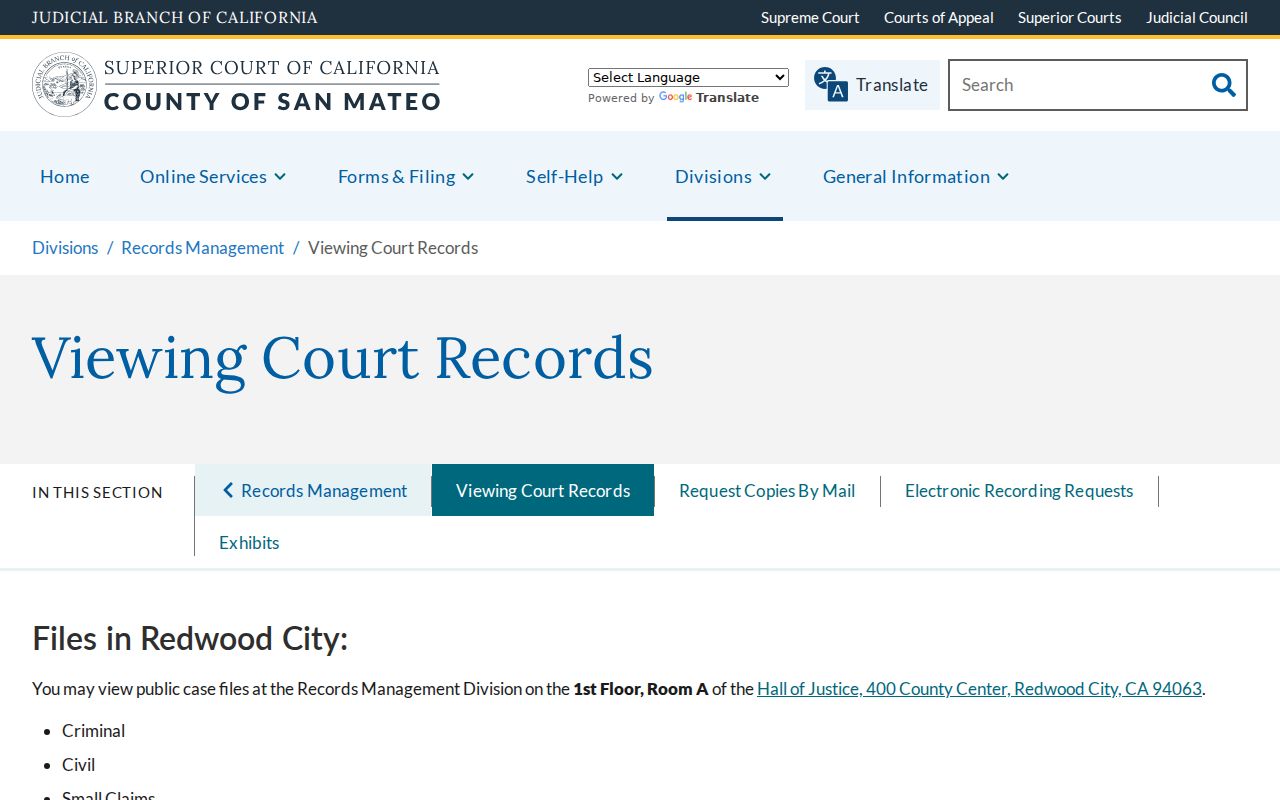
The counter route matters when MIDX identifies a case but does not reveal the docket entry or document needed.
Criminal Case Stages in San Mateo County
A police arrest does not itself create a Superior Court prosecution. The prosecutor first decides whether and what to file. The defendant is arraigned on the filed allegations, and the case may proceed through motions, negotiation, a plea, or trial. A disposition resolves each count; sentencing follows a conviction. Some cases then move into probation or a post-conviction process.
Case flow: Charges Filed › Arraignment › Pretrial › Plea or Trial › Disposition › Sentencing
Read each stage through dated docket entries and the underlying orders. A plea on one count can sit beside dismissals on others, so a case-level label alone may miss the count-by-count result.
Mail San Mateo County Copy Requests
When travel to Redwood City is impractical, Records Management accepts mail requests. Include the case number, parties, approximate filing date or a clear document description, a self-addressed stamped envelope, and a blank check payable to “Superior Court.” The memo line must state a “Not to exceed” amount. Records Management does not research a file for an unidentified document, and the court says it replies within 30 days.
The mail-copy instructions describe the required enclosure and request details.
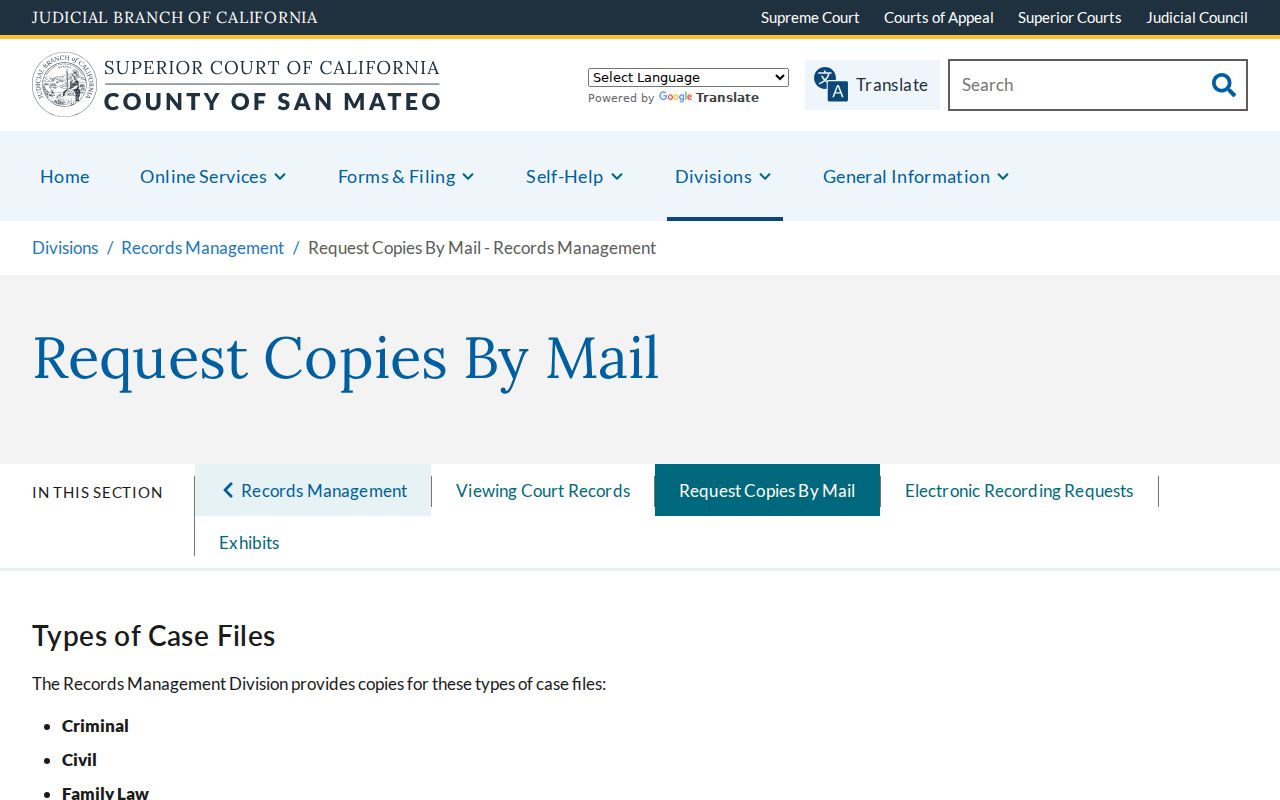
A precise document description and a MIDX case number reduce the chance that the request must be returned for more information.
San Mateo Court Copy Costs
Costs depend on the work and authentication requested, not merely the number of files. A plain paper copy is $0.50 per side. Certification is $40 per record, exemplification is $50, and comparing a copy with the original is $1 per side. A search longer than ten minutes costs $15, while retrieving an off-site file costs $10.
| Service | Fee |
|---|---|
| Plain copy | $0.50 per side |
| Certification | $40 per record or proceeding |
| Exemplification | $50 |
| Compare copy with original | $1 per side |
| Search over 10 minutes | $15 per search |
| Off-site file retrieval | $10 per file |
The court's fee schedule is the source to check before ordering.
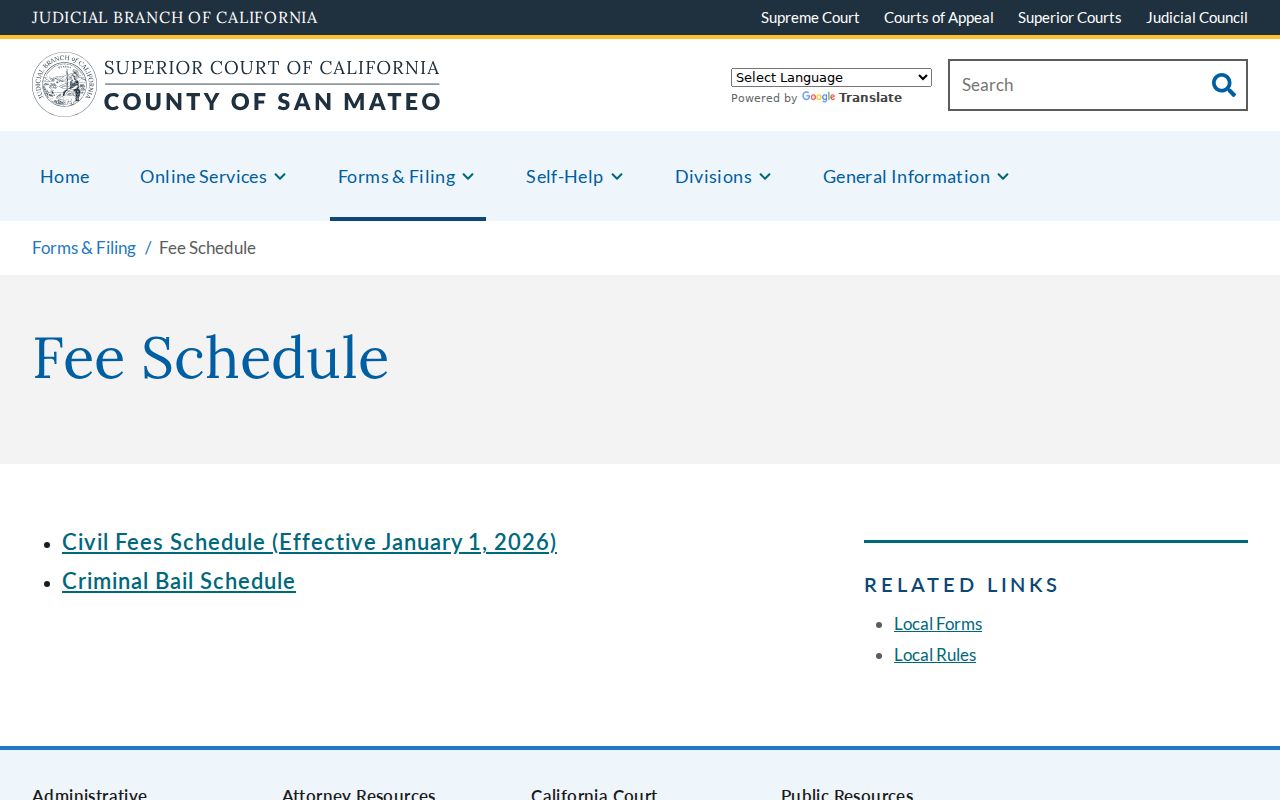
Checking the current schedule is useful when a request needs certification or another service beyond a plain copy.
Pre-1993 San Mateo Criminal Cases
MIDX is not the right endpoint for every older prosecution. For a criminal case filed before 1993, call the Criminal Court Clerk's Office at 650-261-5100 and select option 1. Give the clerk any known party name, approximate year, branch, and old case number. Once the correct case is identified, ask whether it is on site and which viewing or copy route applies.
The court's locations and contact directory confirms the branch contacts.
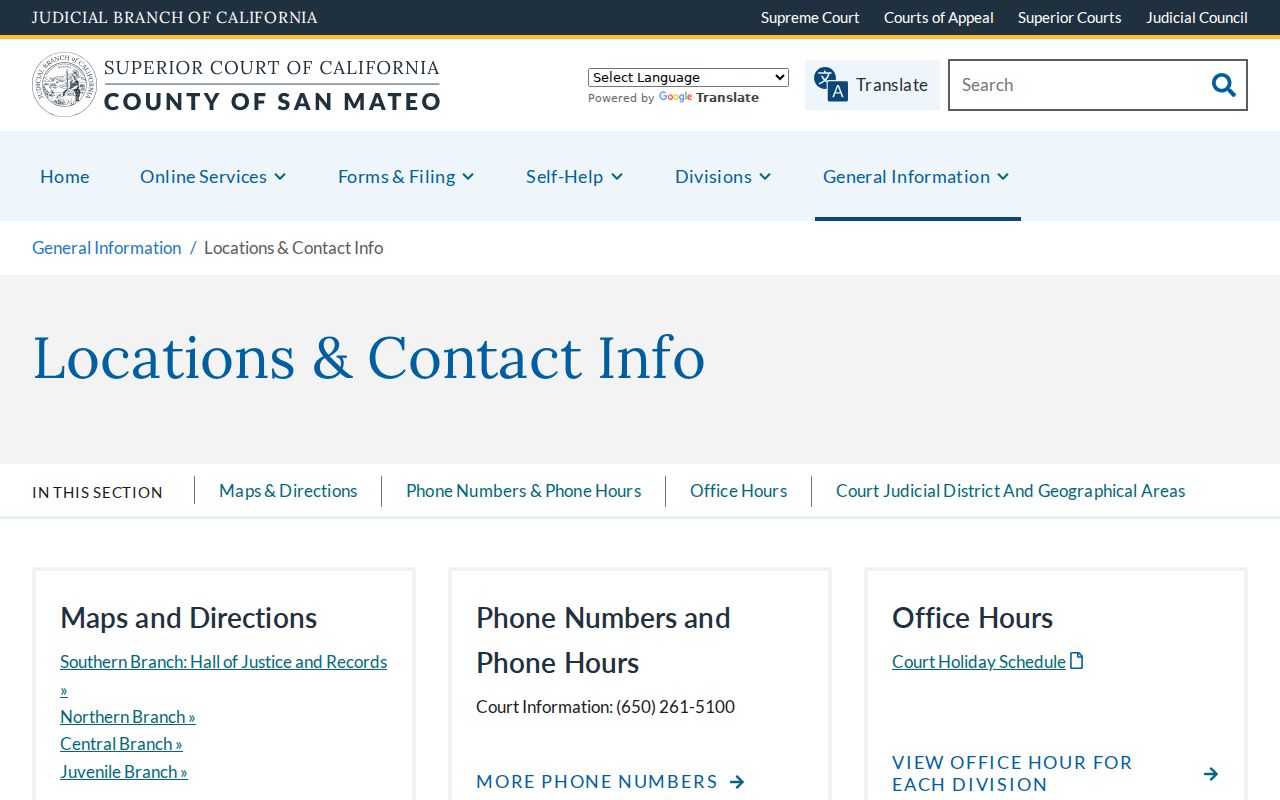
The directory helps route an older-file question to court staff instead of relying on an incomplete online search.
Access Rules for Case Records
Public access does not reach every San Mateo County court record. Juvenile files are limited to specified people and require contact with the Juvenile Clerk's Office. Sealed matters are not ordinary public-search content under California Rules of Court 2.550 and 2.551. Victim and minor identifiers, confidential addresses, medical information, and other protected details may be redacted.
The California Public Records Act governs many agency records, but court-file access follows judicial records rules and the court's own procedures. A missing MIDX result may reflect sealing, confidentiality, age, or indexing limits. Ask the clerk about the proper channel without assuming the matter never existed. DOJ state summary criminal history is also restricted by Penal Code 11105 and is not a public name-search substitute for San Mateo County case records.
The record's custodian also changes with the document. A San Mateo County court clerk can provide public pleadings, minute entries, orders, and judgment papers from the prosecution. The Sheriff's Office or a city police department handles its own incident and arrest narrative under the California Public Records Act. California DOJ controls the fingerprint-based state summary. Sending a focused request to the office that created the record avoids delay and helps preserve the difference between an allegation, a filed charge, and a final disposition. When the public file has a redaction, requesters may ask court staff which access rule applies, but they should not assume a protected detail will be released through another channel.