
San Mateo County Sex Offender Checks
The California state service for registered sex offender searches directs the public to the Department of Justice database. CA.gov says law enforcement updates the information daily. California Penal Code 290.46 sets the public-notification framework, so the state site is the main official channel for a San Mateo County sex offender check. It supports searches by a person's name and by place. Start with the facts you already know, such as a full or partial name, city, ZIP code, or nearby address. Then use the profile details to test whether a result is the person or location at issue.
A registry result has a narrow purpose. It reports registration information cleared for public disclosure, not every arrest, charge, or court result. San Mateo County court files remain a separate source. The registry can also omit people who are required to register but whose records California law does not permit DOJ to display. A blank search therefore means no matching public entry was found. It does not prove that no registrant lives in the area.
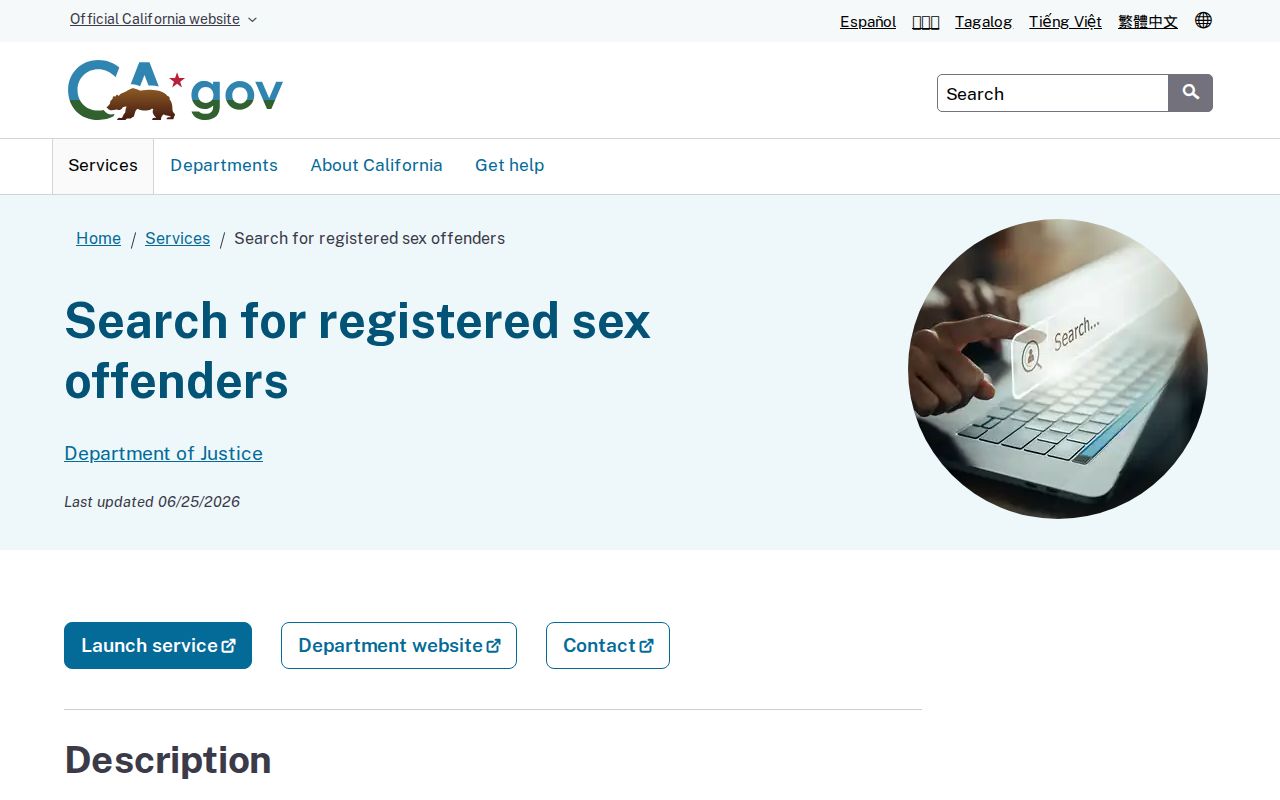
The state service screen confirms that DOJ, rather than a county-run name list, supplies the public search used for San Mateo County.
San Mateo Registry Disclosure Limits
The California Megan's Law Website publishes only information that Penal Code 290.46 authorizes for public display. This distinction is easy to miss. Registration and online publication are not the same legal act. Some registrants have full-address disclosure, some may have less precise location information, and some required registrants are not shown at all. Address detail may also vary with the legal disclosure category.
Use the profile as a public-safety record, not as a complete biography. A missing person or address can reflect the limits of California disclosure law rather than an error in the San Mateo County search. DOJ's site disclaimer and profile status should be read together. If a result appears stale, do not try to correct it through social media or direct contact. Local law enforcement or DOJ is the proper reporting path.
California Megan's Law Website Searches
Open the California Megan's Law Website and review its conditions before searching San Mateo County. DOJ manages the registry and controls what the public interface reveals. A geographic query is useful for neighborhood awareness. A name query works better when the searcher is trying to distinguish one person from others with similar names. The results should be checked against the photograph, aliases, physical description, offense information, and displayed location rather than matched on a name alone.
- Open the official DOJ registry and accept its terms of use.
- Choose a name or geographic search, then enter the details you know.
- Compare the result list with the photograph, aliases, and physical description.
- Open the profile and read the offense, location, status, and disclosure notes.
| Field Label | Type | Required | Notes |
|---|---|---|---|
| Name | Text | Depends on mode | Search by a registrant's name. |
| Address or location | Text and radius | No | Looks near a place entered by the user. |
| City | Text or selection | No | Narrows the geographic search. |
| ZIP Code | Text | No | Useful for a defined local area. |
| County | Selection | No | Use San Mateo for county-focused results. |
San Mateo and National Registry Searches
California's site is the best starting point for San Mateo County. The National Sex Offender Public Website, or NSOPW, adds a cross-state layer. Its form accepts a name or geographic query and permits as many as five ZIP codes separated by spaces. That can help when the person or safety concern crosses California's border or involves several places.
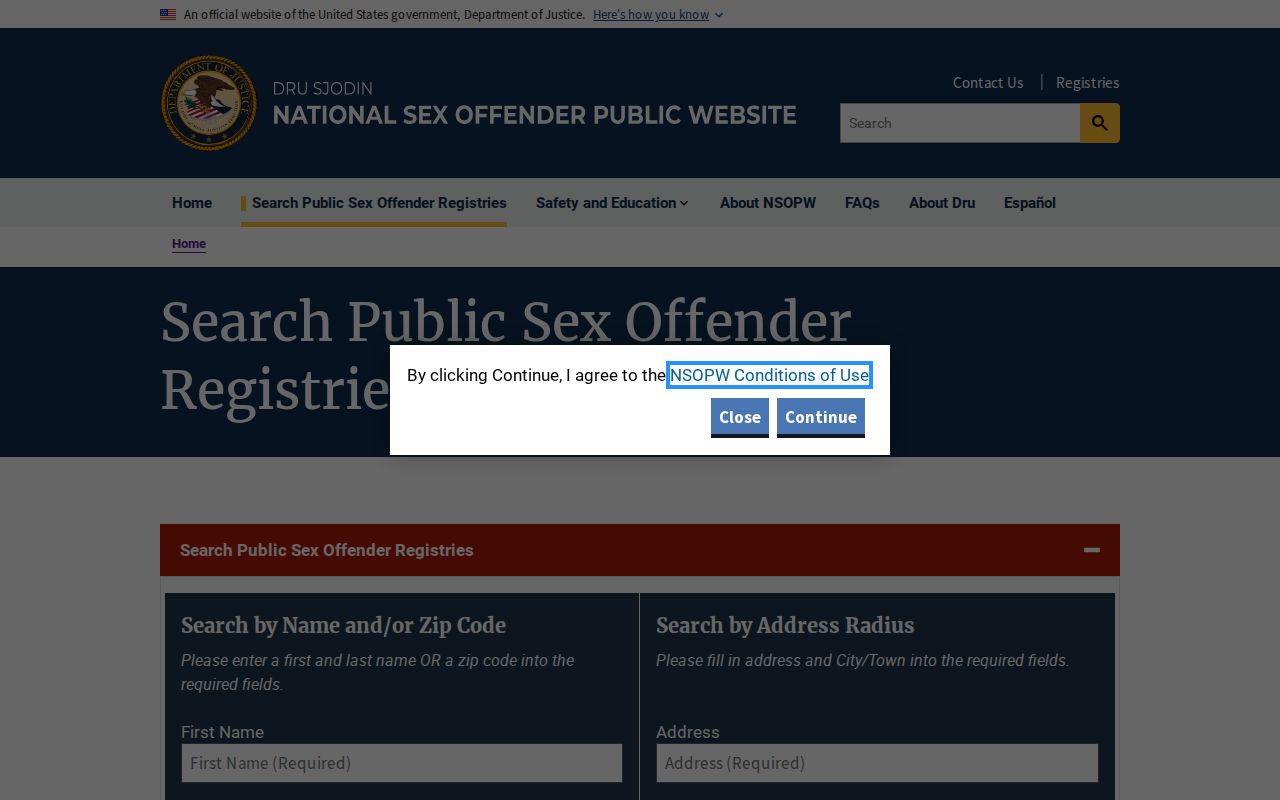
The national form broadens a San Mateo County lookup, while the California DOJ profile remains the direct source for this state's disclosure details.
San Mateo Registry Profiles: What They Show
A public profile may combine identification, offense, and registration fields. Read them as a set. A photograph and physical description help distinguish people who share a name. Known aliases can explain why a name search did not work at first. Offense data identifies the registrable offense and may provide the code section, year, county, or jurisdiction. Address and location fields depend on the disclosure category allowed by California law.
| Name & Aliases | The disclosed legal name and known alternate names. |
|---|---|
| Photo & Physical Description | A photograph plus available sex, race, height, weight, hair, eyes, or marks. |
| Registered Location | An address or less precise location when that disclosure category applies. |
| Offense & Statute | The registrable offense, code section, and available case details. |
| Tier | The California registration tier when shown. |
| Registration Status | Available registration and compliance-related information. |
Daily San Mateo Registry Updates
CA.gov describes the DOJ database as updated daily by law enforcement. That means the statewide public display depends on records sent by the local agencies responsible for registration and verification. A profile can change when an agency submits a new address, status, or other registrant information. The daily update cycle does not make each field a real-time fact, so the profile date and source matter.
The DOJ summary of California registration laws explains the statewide rules behind those records. It also helps separate a person's duty to register from what the public website may disclose. San Mateo County searchers should use the official report channel when they believe a public record is wrong or a registrant may be out of compliance.
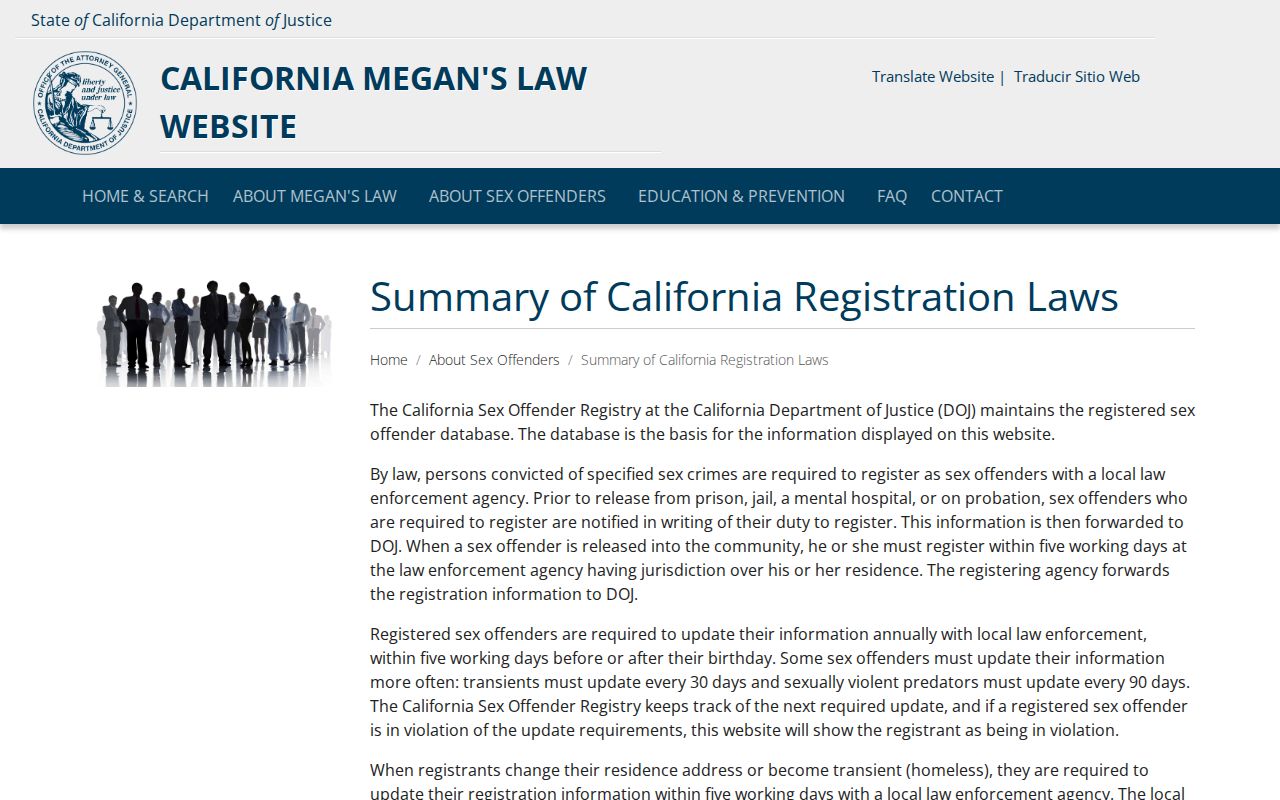
The law summary gives needed context for the profile, especially where public visibility and registration duties do not match.
Registration Levels and Duties in California
California uses a three-tier system. The tier generally sets the minimum registration period, but the end of that period does not always remove a person automatically. Eligible people may need to petition a court for termination. Tier placement can depend on the registrable offense and other statutory factors. Verification frequency can also vary based on circumstances beyond the base tier, so the public profile and current DOJ guidance should be checked instead of assuming that every person follows the same schedule.
| Level / Tier | Minimum Duration | Public-Search Note |
|---|---|---|
| Tier 1 | 10 years for adults | Visibility still follows Penal Code 290.46 disclosure rules. |
| Tier 2 | 20 years for adults | Tier and public address detail are separate issues. |
| Tier 3 | Lifetime | Public fields depend on the governing disclosure category. |
Report San Mateo Registry Concerns
If information suggests that a person may not be complying with registration duties, preserve the profile URL and note the exact fact that raised concern. Do not publish an accusation or confront the person. Registration status can involve facts the public profile does not show, and only law enforcement can assess the report against the full record.
Use a local law-enforcement channel for a San Mateo County concern. The San Mateo County Sheriff's Office lists its headquarters at 330 Bradford Street, Redwood City, California 94063, with a main telephone number of 650-363-4911 and a tip line at 800-547-2700. If there is an immediate threat, contact emergency services. A concern tied to a city may also be routed to that city's police department.
Using Registry Information Lawfully
Registry information supports awareness and practical safety planning. It should be used with care, because a public profile may be incomplete, may not show every registrant, and may present location information at different levels of detail. The state registry is not a substitute for a San Mateo County criminal court file or a person's own California DOJ record review. Those sources answer different questions.
The text of Penal Code 290.46 sets both the disclosure authority and restrictions on use. Read the statute and DOJ conditions before acting on a result. Personal safety steps should focus on conduct, boundaries, supervision, and contact with the proper agency. They should never turn into harassment or vigilantism.
Misuse can be a crime: California Penal Code 290.46 prohibits using disclosed registry information to commit a crime, and misuse may bring enhanced penalties.
The DOJ penalties-for-misuse page gives the state's direct warning about unlawful conduct involving registry data.
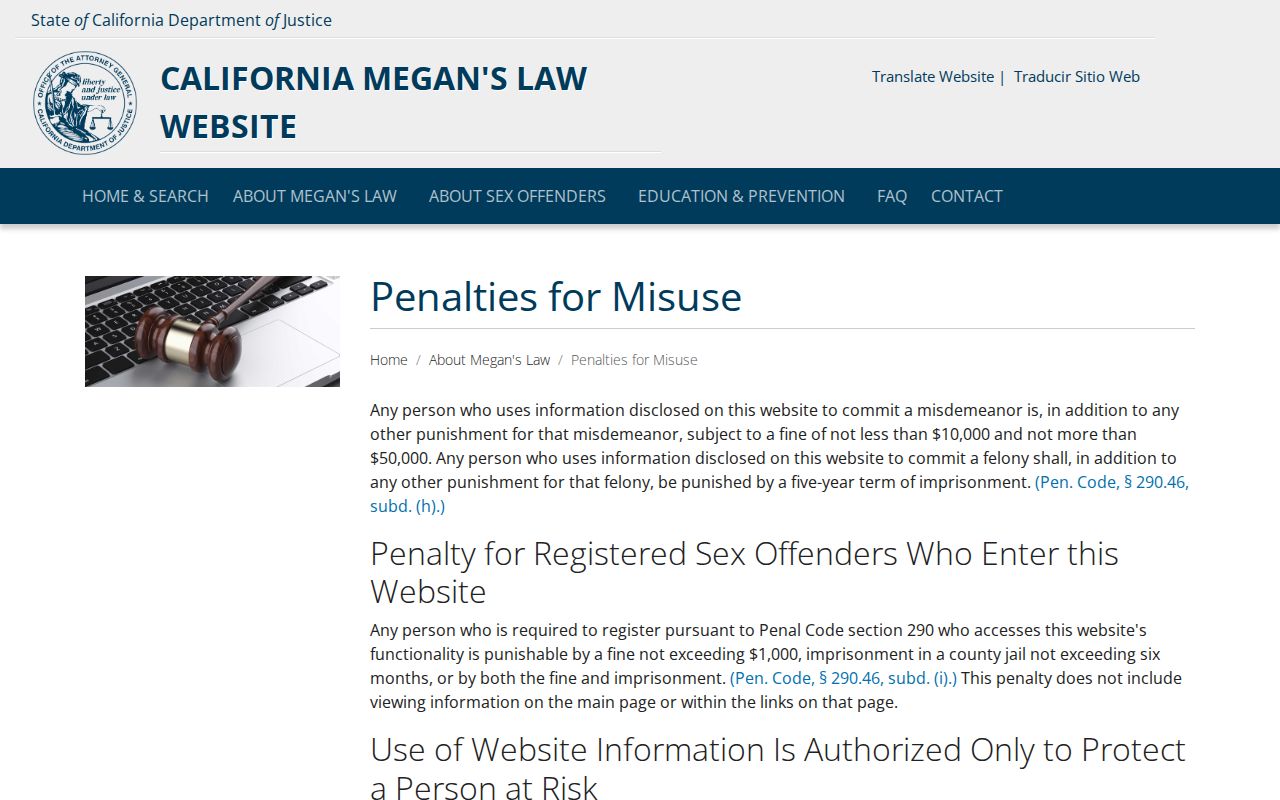
That warning places lawful community awareness at the center of every San Mateo County registry search.
San Mateo Registry Law Source
Penal Code 290.46 is the core source for understanding why some data appears and other data does not. The statute authorizes DOJ's public website, identifies disclosure categories, and establishes restrictions. It is more precise than assumptions based on a map pin or a search result alone.
The California Legislature's official section page is the best place to confirm the current language.
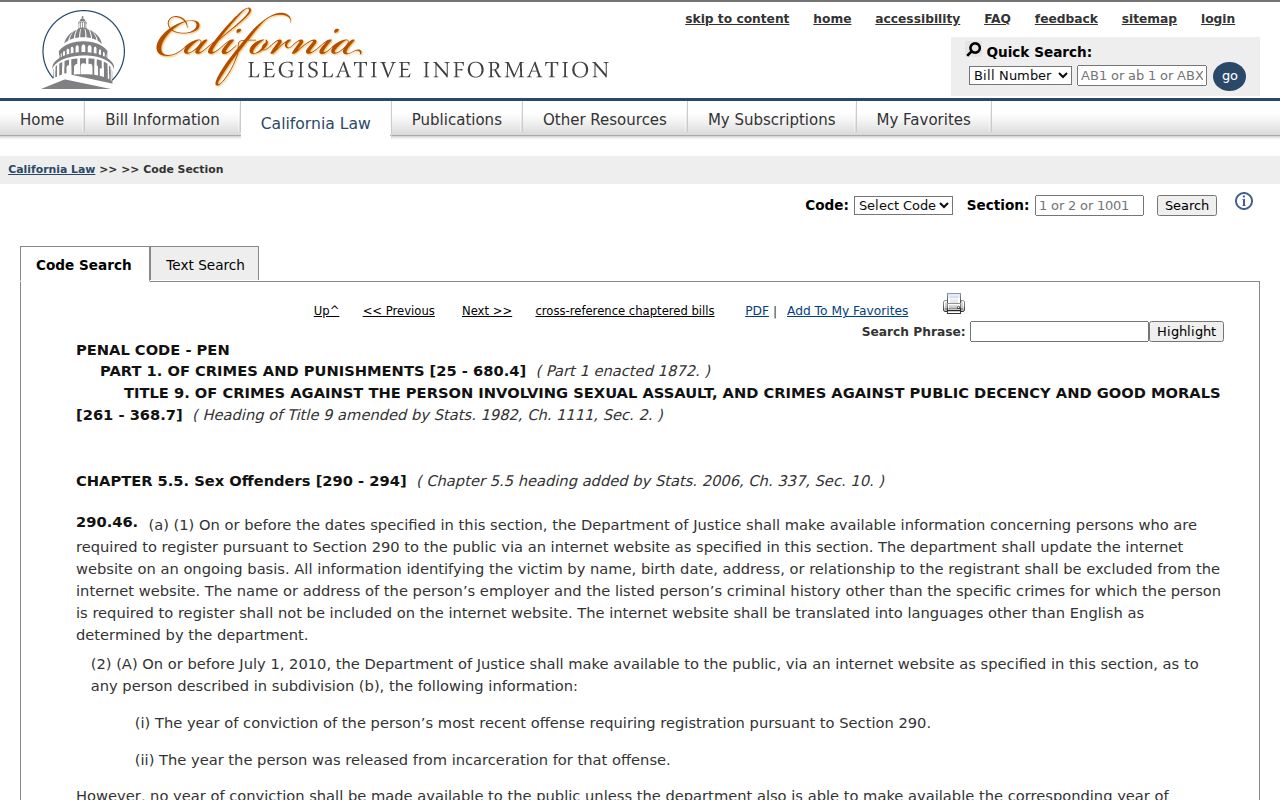
The official code page connects each San Mateo County disclosure back to the law that permits and limits it.